AI Command Center for AMS Training Online Certification Course
Drive smarter and more proactive application operations with the AI Command Center for AMS Training by Multisoft Systems. Explore how AI, AIOps, predictive intelligence, GenAI, and automation can streamline incident response, uncover operational risks, accelerate root cause analysis, and improve service performance across complex enterprise application environments.
 1K+ Reviews
Instructor-Led Training Parameters
Course Highlights
- Instructor-led Online Training
- Project Based Learning
- Certified & Experienced Trainers
- Course Completion Certificate
- Customized Learning Schedule
- Doubt-Clearing Sessions
AI Command Center for AMS Training Online Certification Course Course Overview
AI Command Center for AMS Training by Multisoft Systems focuses on the application of artificial intelligence within modern application management service environments. The course explains how an AI-enabled command center can bring together application monitoring, operational data, service management processes, analytics, automation, and intelligent decision support within a unified operational framework.
Participants learn how AI can support application teams in detecting anomalies, correlating events, prioritizing incidents, identifying probable root causes, predicting operational risks, and recommending corrective actions. The curriculum also explores how automation and self-healing approaches can reduce repetitive support activities while improving response and resolution efficiency.
The course further covers generative AI capabilities for AMS, including operational copilots, knowledge retrieval, incident summarization, resolution recommendations, and natural-language interaction with operational information. Practical scenarios help learners understand how AI Command Center capabilities can be implemented with appropriate governance, security, human oversight, KPIs, and continuous improvement practices.
Instructor-led Training Live Online Classes
Suitable batches for you
| Oct, 2026 | Weekdays | Mon-Fri | Enquire Now |
| Weekend | Sat-Sun | Enquire Now | |
| Nov, 2026 | Weekdays | Mon-Fri | Enquire Now |
| Weekend | Sat-Sun | Enquire Now |
Share details to upskills your team
Enquire for Self-Paced Learning
Share your details and our training advisor will connect with you regarding self-paced learning options.
AI Command Center for AMS Training Online Certification Course Course curriculum
Curriculum Designed by Experts
AI Command Center for AMS Training by Multisoft Systems focuses on the application of artificial intelligence within modern application management service environments. The course explains how an AI-enabled command center can bring together application monitoring, operational data, service management processes, analytics, automation, and intelligent decision support within a unified operational framework.
Participants learn how AI can support application teams in detecting anomalies, correlating events, prioritizing incidents, identifying probable root causes, predicting operational risks, and recommending corrective actions. The curriculum also explores how automation and self-healing approaches can reduce repetitive support activities while improving response and resolution efficiency.
The course further covers generative AI capabilities for AMS, including operational copilots, knowledge retrieval, incident summarization, resolution recommendations, and natural-language interaction with operational information. Practical scenarios help learners understand how AI Command Center capabilities can be implemented with appropriate governance, security, human oversight, KPIs, and continuous improvement practices.
- Understand the architecture and operating model of an AI-enabled AMS Command Center.
- Apply AI concepts to application monitoring, observability, event management, and support operations.
- Understand intelligent incident classification, prioritization, routing, and triage.
- Apply AI-assisted techniques for root cause analysis and diagnostics.
- Use predictive analytics concepts to identify application risks and potential service disruptions.
- Understand automation and self-healing approaches for repetitive AMS operations.
- Analyze SLA, KPI, application health, and operational performance information.
- Explore generative AI and copilot capabilities for application support teams.
- Apply governance, security, risk management, and human oversight to AI-enabled operations.
- Plan practical AI Command Center use cases for enterprise AMS environments.
Course Prerequisite
- Basic understanding of application management services or IT operations.
- Familiarity with application support and incident management processes.
- Basic knowledge of ITSM concepts such as incidents, problems, changes, and SLAs.
- General understanding of enterprise application environments.
- Basic awareness of AI, machine learning, automation, or analytics is beneficial but not mandatory.
- Programming or advanced data science expertise is not required for understanding the core course concepts.
Course Target Audience
- AMS Professionals
- Application Support Engineers
- Application Support Leads
- AMS Delivery Managers
- Service Delivery Managers
- AIOps Professionals
- IT Operations Professionals
- Incident and Problem Managers
- Site Reliability Engineers (SREs)
- DevOps Professionals
- Automation Engineers
- Application Owners
- Solution and Enterprise Architects
- ITSM Professionals
- Technical Consultants
- Professionals involved in AI-driven IT operations transformation
Course Content
- Understanding Application Management Services (AMS)
- Traditional vs. AI-enabled AMS operations
- Evolution from reactive to proactive application support
- Introduction to AIOps concepts
- Purpose of an AI Command Center
- Key Command Center capabilities
- Business and operational benefits
- Common enterprise AMS use cases
 DOWNLOAD CURRICULUM
- AMS service delivery lifecycle
- L1, L2 and L3 support structures
- Centralized and distributed support models
- AI Command Center functional architecture
- Operational intelligence layers
- Data, analytics, AI and automation components
- Integration with enterprise application landscapes
- Integration with IT service management processes
- Human-in-the-loop operating model
- Command Center roles and responsibilities
DOWNLOAD CURRICULUM
- Understanding AMS operational data
- Application logs, events, alerts and metrics
- Incident and service request data
- Performance and availability information
- Historical ticket and resolution data
- Knowledge bases and operational documentation
- Data ingestion and integration concepts
- Data normalization and enrichment
- Creating contextual operational data
- Data quality considerations for AI
- Preparing AMS data for analytics and AI models
DOWNLOAD CURRICULUM
- Application monitoring fundamentals
- Infrastructure and application observability
- Metrics, logs, traces and events
- Service health monitoring
- Application dependency visibility
- Dynamic baseline creation
- AI-based anomaly detection
- Identifying abnormal application behavior
- Noise reduction in monitoring environments
- Service health scoring
- Intelligent operational dashboards
- Early identification of performance degradation
DOWNLOAD CURRICULUM
- Understanding event and alert volumes
- Event normalization and enrichment
- Duplicate alert identification
- Alert deduplication and suppression
- Event clustering
- Temporal and contextual correlation
- Identifying related operational events
- AI-based alert prioritization
- Reducing alert fatigue
- Mapping events to affected applications and services
- Event-to-incident intelligence
- Escalation based on operational impact
DOWNLOAD CURRICULUM
- Incident lifecycle in AMS
- Automated incident identification
- AI-based ticket categorization
- Priority and severity prediction
- Intelligent assignment and routing
- Similar incident identification
- Historical incident pattern analysis
- Business-impact-based prioritization
- Automated incident enrichment
- Incident summarization
- Recommended next actions
- Intelligent escalation
- Reducing Mean Time to Acknowledge (MTTA)
- Reducing Mean Time to Resolve (MTTR)
DOWNLOAD CURRICULUM
- Root Cause Analysis (RCA) fundamentals
- Challenges with manual RCA
- AI-assisted diagnostic analysis
- Event and dependency correlation
- Application topology analysis
- Log and metric correlation
- Historical failure pattern analysis
- Probable root cause identification
- Root cause ranking
- Identifying upstream and downstream impact
- Similar-problem and known-error matching
- Resolution recommendation
- Evidence-based diagnostic insights
- Human validation of AI-generated RCA
DOWNLOAD CURRICULUM
- Moving from reactive to predictive AMS
- Predictive analytics fundamentals
- Trend and pattern recognition
- Application performance forecasting
- Capacity and resource forecasting
- Predicting application degradation
- Incident probability analysis
- Recurring issue prediction
- SLA breach risk prediction
- Early warning indicators
- Operational risk scoring
- Preventive action recommendations
- Proactive maintenance strategies
- Continuous refinement using operational outcomes
DOWNLOAD CURRICULUM
- Automation opportunities within AMS
- Rule-based vs. AI-driven automation
- Runbook automation
- Automated diagnostic workflows
- Automated remediation
- Trigger-based corrective actions
- Self-healing application concepts
- Restart and recovery automation
- Resource and configuration remediation scenarios
- Automated ticket updates and closure workflows
- Approval-based remediation
- Human-in-the-loop automation
- Automation guardrails
- Rollback and exception handling
- Measuring automation effectiveness
DOWNLOAD CURRICULUM
- AMS SLA management fundamentals
- Operational KPIs and service metrics
- Application availability and performance indicators
- Incident response and resolution metrics
- MTTA and MTTR analysis
- SLA compliance monitoring
- Predictive SLA breach identification
- Service health scoring
- Business impact correlation
- AI-assisted performance analysis
- Trend and exception analysis
- Executive and operational dashboards
- Identifying improvement opportunities through KPI intelligence
DOWNLOAD CURRICULUM
- Generative AI fundamentals for application support
- Role of Large Language Models in AMS
- AI copilots for support teams
- Natural-language interaction with operational information
- Incident and alert summarization
- Automated ticket summarization
- Knowledge retrieval for support engineers
- Retrieval-Augmented Generation (RAG) concepts
- Resolution recommendation
- Runbook and troubleshooting guidance
- Knowledge article generation
- Shift handover summarization
- Problem investigation assistance
- Prompt design for AMS use cases
- Context grounding and response accuracy
- Managing hallucination risks
- Human verification of generated recommendations
DOWNLOAD CURRICULUM
- AI governance requirements in AMS
- Responsible AI principles
- Data privacy and operational security
- Access and authorization considerations
- Protection of sensitive application information
- AI model transparency
- Explainability of operational recommendations
- Bias and incorrect recommendation risks
- AI output validation
- Human-in-the-loop controls
- Automation approval policies
- Audit trails and traceability
- Model and prompt governance
- Monitoring AI effectiveness
- Risk management for autonomous operations
DOWNLOAD CURRICULUM
- Assessing AMS AI readiness
- Identifying high-value AI use cases
- Prioritizing automation opportunities
- Defining Command Center architecture
- Data and integration planning
- Pilot and phased implementation strategy
- Defining operational roles
- Establishing KPIs and success measures
- Incident intelligence scenario
- Predictive issue detection scenario
- AI-assisted RCA scenario
- GenAI support assistant scenario
- Automated remediation scenario
- SLA risk prediction scenario
- Measuring operational benefits
- Feedback loops and model improvement
- Scaling AI capabilities across applications
- Continuous optimization of the AI Command Center
DOWNLOAD CURRICULUM
Request for Enquiry
Explore Course Resources
Strengthen your learning with useful resources designed to help you prepare, practice, and evaluate your understanding.
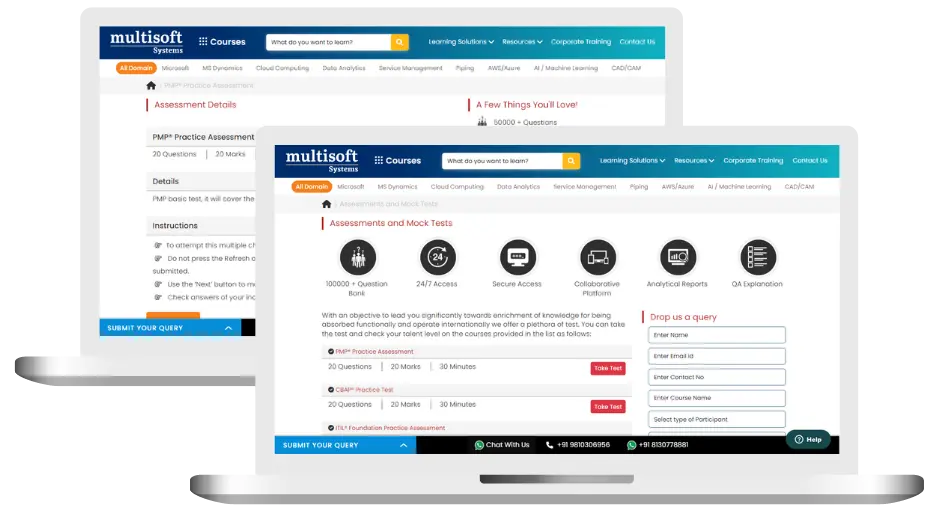
AI Command Center for AMS Training (MCQ) Assessment
This assessment tests understanding of course content through MCQ and short answers, analytical thinking, problem-solving abilities, and effective communication of ideas. Some Multisoft Assessment Features :
- User-friendly interface for easy navigation
- Secure login and authentication measures to protect data
- Automated scoring and grading to save time
- Time limits and countdown timers to manage duration.
AI Command Center for AMS Corporate Training
Employee training and development programs are essential to the success of businesses worldwide. With our best-in-class corporate trainings you can enhance employee productivity and increase efficiency of your organization. Created by global subject matter experts, we offer highest quality content that are tailored to match your company’s learning goals and budget.
Global Clients



Customized Training
Be it schedule, duration or course material, you can entirely customize the trainings depending on the learning requirements
Expert
Mentors
Be it schedule, duration or course material, you can entirely customize the trainings depending on the learning requirements
360º Learning Solution
Be it schedule, duration or course material, you can entirely customize the trainings depending on the learning requirements
Learning Assessment
Be it schedule, duration or course material, you can entirely customize the trainings depending on the learning requirements
Why AI Command Center for AMS Training Online Certification Course for Your Professional Growth
Strengthen your professional capabilities with practical learning, industry-relevant knowledge, and skills applicable to real-world business and technology environments.
Industry-Relevant Skills
Gain knowledge aligned with current industry practices, technologies, processes, and professional requirements.
Practical Learning
Understand concepts through practical scenarios, instructor-led discussions, exercises, and use cases.
Enhanced Professional Capability
Strengthen your ability to work confidently with relevant tools, workflows, platforms, and business processes.
Broader Career Opportunities
Add valuable capabilities to your profile and explore opportunities across relevant roles, projects, and industries.
Adapt to Changing Technologies
Stay familiar with evolving technologies, methodologies, and practices shaping modern enterprise environments.
Professional Recognition
Demonstrate your training achievement with a course completion certificate from Multisoft Systems.
 Zoom-in
Certification Training Achievements: Recognizing Professional Expertise
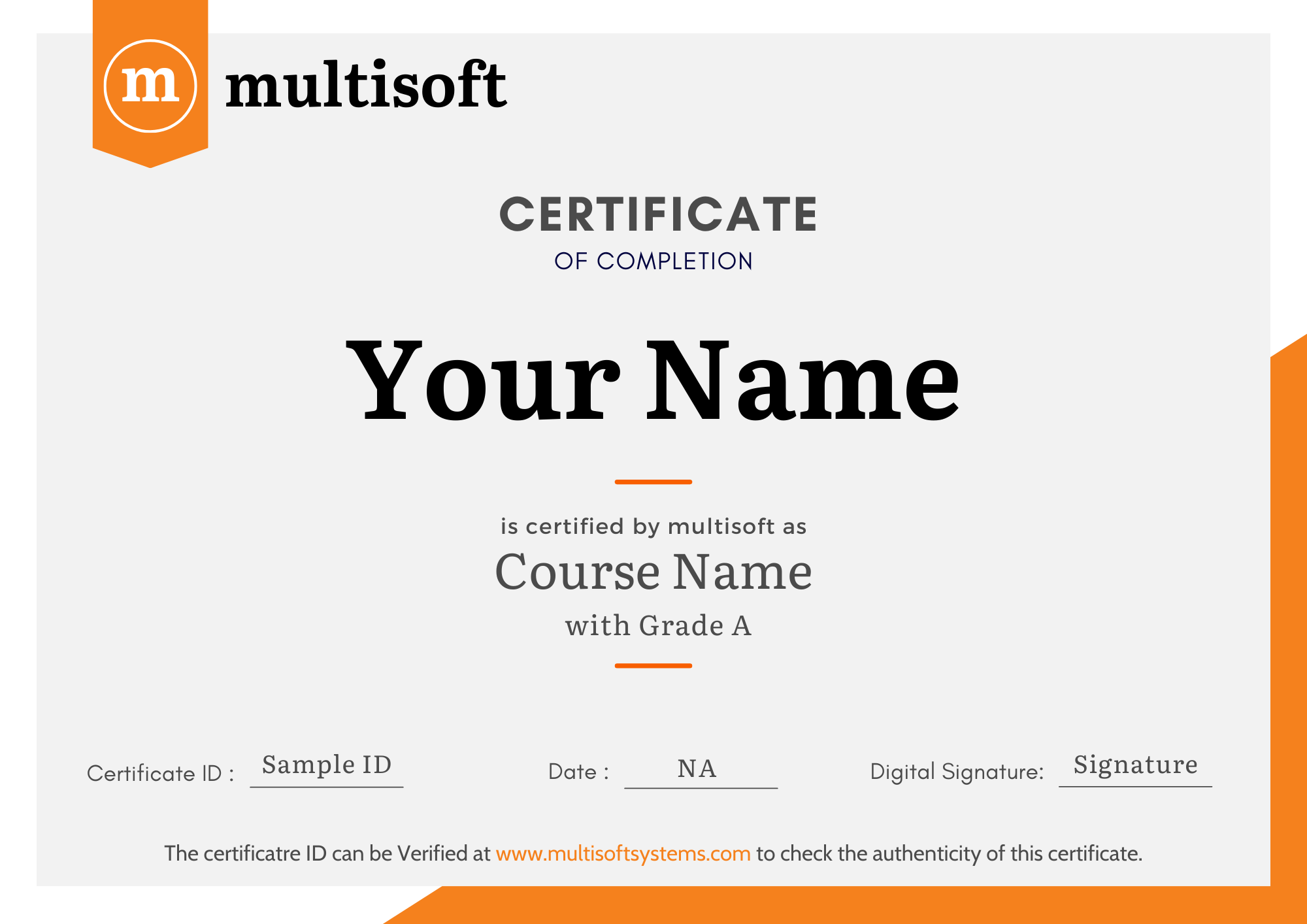
Multisoft Systems is the “one-top learning platform” for everyone. Get trained with certified industry experts and receive a globally-recognized training certificate. Some Multisoft Training Certificate Features :
- Globally recognized certificate
- Course ID & Course Name
- Certificate with Date of Issuance
- Name and Digital Signature of the Awardee
Trending Courses
Why Learners Choose Multisoft Systems
Compare key training features and see how Multisoft Systems focuses on structured learning, practical understanding, and learner support.
Training Features That Matter
Evaluate the learning experience across important areas before selecting a training program.
Instructor-Led Learning
Structured sessions guided by experienced trainers.
Practical Learning
Hands-on exposure that supports concept understanding.
Flexible Learning Options
Learning formats designed around different schedules.
Learner Support
Assistance throughout the training journey.
Learning Resources
Resources that support revision and continued learning.
Training Certificate
Recognition after successful course completion.
Choose Training That Goes Beyond Theory
Multisoft Systems combines guided learning, practical exposure, flexible delivery, learner support, and structured resources to create a more complete training experience.
SAP SuccessFactors Implementing SmartRecruiters Training: A Complete Guide
Modern recruitment requires businesses to find suitable candidates quickly and... Read Article
LabWare LIMS: Features, Benefits, Applications & Training
Modern laboratories operate in an environment where accuracy, efficiency, traceability,... Read Article
What Is SAP Convergent Invoicing? Features, Processes, and Business Applications
Managing invoices accurately becomes challenging when businesses handle subscriptions, usage-based... Read Article
SAP SuccessFactors Recruiting: Features, Processes, and Career Opportunities
Recruiting the right talent is essential for business growth, but... Read ArticleAI Command Center for AMS Training Online Certification Course Trainer Profile
20+ Years Experienced
Our AI Command Center for AMS Corporate & Certification Program trainers bring 13+ years of proven industry expertise, delivering practical insights aligned with real project environments.
Trained 3150+ Professionals
Our expert trainers have successfully trained 3350+ professionals through structured, real-time training programs designed for industry readiness and career growth.
Certified Experts & Real-Time Project Learning
Build strong practical skills through live project-based training sessions led by certified industry experts with real-world experience.
Hands-on Learning Approach
Gain practical exposure through real-time scenarios, industry case studies, and hands-on assignments that simulate actual project challenges.
Certification Training Guidance
Receive expert support to prepare effectively, practice strategically, and confidently achieve globally recognized certification success.
Customized Training Delivery
Flexible training approach tailored to individual learning goals, skill levels, and evolving industry requirements for maximum effectiveness.
AI Command Center for AMS Training Online Certification Course FAQ's
The AI Command Center for AMS Training focuses on applying artificial intelligence, analytics, automation, AIOps, and generative AI capabilities to application management services. It covers intelligent monitoring, incident management, RCA, predictive operations, SLA intelligence, and automated remediation.
What Attendees are Saying
Our clients love working with us! They appreciate our expertise, excellent communication, and exceptional results. Trustworthy partners for business success.
Share Feedback