



































































































































Blog

Unlocking Knowledge, Empowering Minds: Your Gateway to a World of Information and Learning Resources.

blog-image

Become a successful data scientist with Advanced SAS certification


December 16, 2015

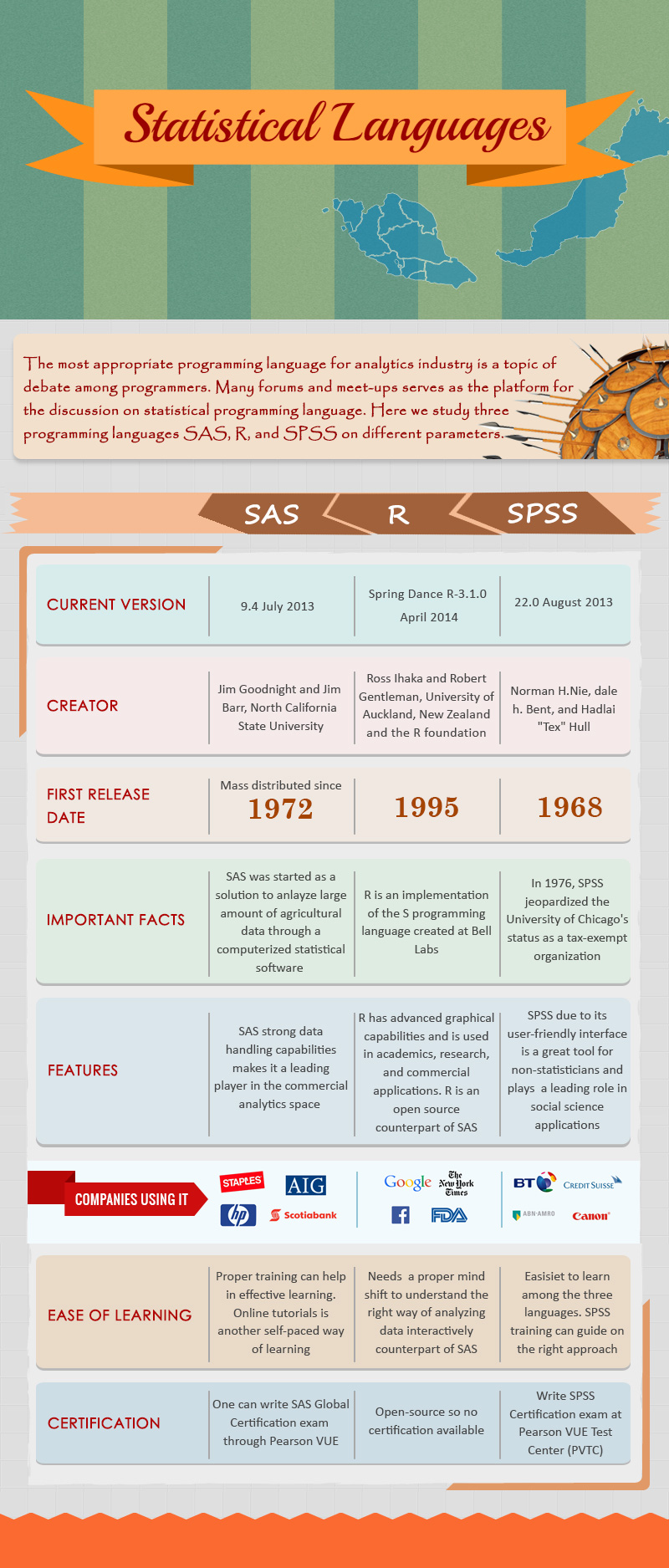
Ever had a fancy for dealing with numbers? Are you currently engaged with the IT industry? If the answer is yes to both the above questions, it just might be time for you to enrol for an Advanced SAS certification, which can help spearhead your career in the right direction.

Advanced-SAS-certification-training

SAS stands for Statistical Analysis System. With the knowledge of SAS, one can reach the highest level of data analytics in the industry. However, to get to the advanced level, one has to complete training in base SAS.

With guidance from the reputed training institute and with one’s own will to study, it is possible to attain the depths of SAS knowledge. Instructors will tell you that in today’s world, there is tremendous use of data and this data needs to be classified or arranged. Data analytics helps to arrange data as per set patterns.

For whom is the course useful?   

The Advanced SAS course is highly suitable for research scientists and SAS professionals. These professionals deal with a huge amount of data on a daily basis. Other than them, the professionals who work with statistical data collection and analysis can also benefit from this course. As a prerequisite, it is important to have some experience in SAS programming and an understanding of SQL.

Career of a data scientist

The use of Big Data and its analysis has resulted in the creation of a field called as data science. For him or her, certification in Advanced SAS programming is highly suitable. Though formal training for a data scientist is similar to that of a Big Data programmer, the scientist stands out in the areas of business acumen and communication of findings to business and IT leaders.

Data scientists do not just pick problems, but pick the ones which are of most value to the organisation. By staring at the data which is categorised through advanced SAS, data scientists can spot trends in the market. The data scientist not only collects and reports data, but analyses it from many different angles.

Advanced SAS training teaches SAS MACRO and SQL to the aspirants. It is helpful for growth in the data analytics field. More can be known during a business analyst certification course.

Read More

blog-image

Robust programming knowledge gained through Python training


December 15, 2015

Anyone who wishes to learn a powerful programming language must incorporate the knowledge of Python into themselves. It is meant for professionals in a variety of domains such as web development, embedded systems, scripting and automation testing. Python is open source in nature and is used across a variety of applications. Know more about this language in a Python training course.

Python-training-course

Python can be used in a variety of academic environments. Financial analysts, engineers and scientists are some of the people who can make use of the powerful programming language in their work. Training courses from reputed institutes can address both programming and scientific practices in Python. Some of the instructors who teach the language have PhDs in diverse fields such as geophysics, mechanical engineering, chemical engineering, mathematics and biomedical imaging. As programmers, they help the aspirants connect the real world with the classrooms.

Prerequisites for attending Python classes

Aspirants wishing to take Python training classes must be familiar with one or more programming languages. A working knowledge of a specific language, coupled with the interest to learn other languages is highly beneficial. Popular sites such as YouTube and Dropbox make use of Python. For this reason, Google also encourages its employees to have knowledge of this language.

Different stages of learning

At the first level, aspirants get to know about the different concepts in Python. They understand that this object oriented language can be used for a number of scripting applications and standalone projects. Soon they are given different scenarios, on which they have to apply gained knowledge to make programs.

Aspirants learn how to make use of functions in order to simplify various tasks. They also get to know how to import modules from the standard Python library. Knowledge about data structures is given to them.

At the penultimate level, students learn details about the input output cycle. There are also many regular expressions which have to be used. Such regular expressions are important for searching files and directories.

Python is compatible with a variety of Operating Systems. It can be used on UNIX, Windows and Mac. That enables it to be used in every home or organisation. This is one of the reasons why it has been easily accepted in organisations.

Methods of training 

There can be various methods of teaching Python in various training institutes. One of the options is that students can opt for online training, in which they require an Internet connection while communicating with the instructor at a remote location. Classroom training teaches the same concepts within the confines of a classroom. This is accompanied by lab practical sessions, which helps to test the knowledge. Under corporate training, experienced instructors visit various companies and train batches of employees.

Read More

blog-image

Why Python has become the favorite programming language for data scientists


December 11, 2015
The high-level general purpose programming language, Python, has emerged as a superb programming language, all because of its data science pipeline execution, data focused libraries and rich data structures. Being able to be applied for several classes of problems, this programming language has become the most favored for data scientists for executing comprehensive and qualitative data analysis. python-training-multisoft-systems

We take a look at 5 most pivotal reasons why it is the best language for data analysis:

  1. Enhanced Readability
The ease of readability in Python makes it a better language to work upon, in comparison to other scripting languages. The whole syntax architecture is very well thought-out and makes for great collaborative implementation. The basic principality of the Python is to make its code easily reusable, which has been well admired by the developers. The use of indentation also makes it highly beneficial in terms of readability factor.
  1. Data Structures
Python has built-in correct data structures for the algorithm, like sets, lists, tuples, strings, dictionaries and more, which holds data objects and items in an ordered manner, essential for optimal development implementation. These features make it Python highly scalable for research-oriented coding.
  1. Extensive range of libraries
One of the aspects which is highly admired by the developers is the availability of a wide range of libraries in Python, like IPython, NumPy/SciPy, Cython, PyTables, PyQt, TreeDict, and many more, enabling data scientists to do more and better functions. This built-in database functionality lets the data scientist to explore and make use of rich features for executing different tasks, without having to switch to another language.
  1. Language Incorporation
The ease of calling other language functions from Python (through the MATLAB engine) provides high-end functionality. This interface universality lets the scientist to code and develop required programs in an advanced and efficient manner.
  1. In-Built testing framework
The low hurdle-to-entry, built-in testing framework in Python makes the whole workflow process faster, with implementation of test cases writing. This encouraged process for good tests enhances the overall experience to develop efficient and advanced programs. Thus, these functionalities, among others, make this highly advanced and efficient programming language as the favorite for data scientists. Anyone willing to incorporate high-end programming in data science and research should undertake a quality Python programming training, so as to build their knowledge in Python applications, which is becoming highly favored by industries for data science application.
Read More

blog-image

Data analytics made easy with R programming


December 10, 2015

Individuals who have an interest in both data analysis and computing can enhance their knowledge by learning the R language. The R programming language can be used for graphics and statistical computing. It helps companies get an insight into complex data. This interactive object-oriented language has been designed by statisticians for statisticians. To understand this language best, one should enrol into an R programming training course.

r-programimg-training-multisoft-systems

Functions for almost every statistical model, data manipulation or chart required by data analysts can be created with this language. By virtue of being open source, its source code is easily available for modification and use for someone who wants to see how its algorithms work underneath the covers. It has benefited from the development of other successful open source projects such as MySQL and Linux, since code has been vastly improved over the years.

Advantages of R   

As mentioned above, it is open source and thereby available for free. It is powerful and also highly extensible in nature. Being an environment that makes use of command line scripting, a number of complex data analysis steps can be stored within R. This helps one in reusing the previous analysis work on similar data easily, instead of relying on a point-and-click interface.

It is easier for others to validate one’s research results and check work for possible errors. Interestingly, an Excel coding error was previously identified during 2013 in a reputed economic analysis report called Reinhart/Rogoff. R may be difficult to learn in the beginning, but it is immensely helpful in the long run.

Various programming features of R

Like other languages such as MATLAB and APL, R also supports the use of Matrix Arithmetic. Its data structures consist of arrays, data frames, vectors, matrices and data lists. R also supports procedural programming through functions and object-oriented programming through generic functions.

R is commonly used as an environment for software development and statistical computations. However, it can also work as a generic matrix calculation toolbox, which has performance benchmarks close to MATLAB. Such factors have helped it become one of the leading languages for data scientists.

Being taught by experienced instructors

R is a highly technical language, which means that it requires the expertise of an instructor. This instructor must be trained in teaching the practical aspects of the programming language to the aspirants. He or she must understand how to explain the concepts to aspirants in a simple manner. Appropriate guidance must also be provided during lab sessions. Any reputed training institute will certainly have experienced instructors.

Therefore it is clear that R programming language is very helpful for statisticians and data scientists. People like academicians, PhD scholars, consultants, risk analysts and survey researchers can make good use of the language. For more information, one can take up an advanced business analytics training course.

Read More

blog-image

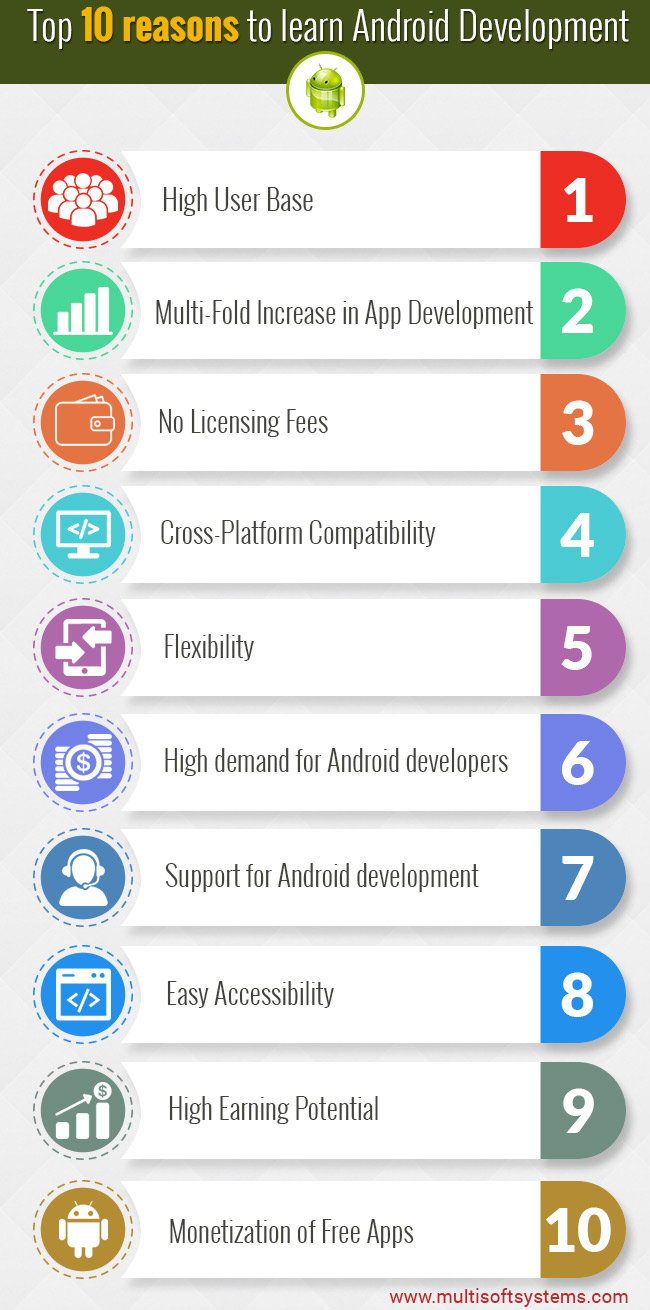
Why developers prefer Android app development over Apple development


December 8, 2015

Not so long ago, iOS was the platform that had all the attention from the developers, with innumerable quantity of apps available on the store. But last few years has seen a seismic change in this trend, with Android app development becoming the major player in the segment.

android-training

The main reason for this behavior is because Google does not put any stringent checks on Android app development and distribution, thereby giving more freedom to the developers, which is why Android has become the favorite for developers over iOS and windows. Apart from this fact, there are several other reasons, why developers prefer the Android app development. 5 top reasons stated below:

  1. Market Size

Android devices have become the force in the global smartphone segment, holding about 80% share. This reason alone is reason enough for developers to build android apps and target a wider segment of customers. Even through a free android app, the extensive number of downloads and advertising potential helps the developers to garner huge profits.

  1. Java programming

Android apps are developed using the Java programming language, with which most of the developers are familiar with. This is not possible with iOS, as the developer has to learn the specific language for Apple development. Also, Android apps developed with Java can be easily ported to other systems like Ubuntu, Symbian, Blackberry and Windows 10.

  1. No barrier in development device

Android developer can benefit by developing an Android on a Windows, Mac, or a Linux. Whilst this is not possible with Apple development, as the developer needs to have access to a Mac. This reason is highly favored by freelance developers to opt for Android training.

  1. Apps for all sizes

As the android devices come in varied sizes, the developers have wider range of choices to ideate and target their apps for a large number of customers, across all age group and forms.

  1. Easy deployment on the store

You can deploy an app on the Google Play Store in a few days, with easy update options, whilst Apple Play Store takes weeks for deployment. The registration fee to register on Google Play Store is also very cheap in comparison to Apple Store.

Thus, developers nowadays prefer Android mobile app development training over iOS, to benefit from easy development architecture and wider market potential.

Read More

blog-image

What features make Salesforce Service Cloud the best CRM platform for businesses


December 7, 2015

Widely regarded as a leading CRM tool, Salesforce Service Cloud offers tactical customer interaction platform to all-size businesses, who are looking to incorporate multi-channel customer interaction for a more responsive and faster service deliverance. Engaging with customers in an enhanced manner helps businesses improve their overall productivity and agent collaboration.

Salesforce-Service-Cloud-training

What makes Salesforce Service Cloud standout?

Being equipped with highly capable features, the Service Cloud offers utmost capabilities to engage in rich and swift customer interaction. The distinctive features which make it unique and unparalleled are:

  1. Service Console

The Service Console features helps in easily and effectively prioritizing cases with respect to date, source, urgency & product. This helps the manager to efficiently auto assign cases to the team members, which they can further work upon to resolve in a quick manner, resulting in decreased resolution time.

  1. CTI Integration

Aptly suitable for resolving customer service cases, Service Cloud integration with the phone system helps in locating & accessing detailed customer’s info like account, contact and opportunity details. This integration helps in eliminating cases of wrong numbers and ensures that no calls go undocumented.

  1. Social Channel Integration

The most effective and customer-centric interaction happens through social media channels, and Service Cloud offers this capability efficiently. Businesses can manage the customer cases through different social networks, like Facebook, Twitter, Live Chat and more options. It helps in responding to customers in a quick and customer-favorable manner.

  1. Dashboard & Reporting

The feature rich and interactive dashboard offers all the insights into team working and report metrics right through a single and easy to understand interface. See what customers are closing the most cases? From where are you getting the maximum conversion? What is the customer satisfaction score? And so on.

  1. Knowledge Base

The knowledge base can be easily accessed by the customers, which provides them comprehensive information pertaining to blogs, articles and FAQ’s, intended to help them resolve their issues.

Befitting each and every department within a company, Salesforce Service Cloud is understandably the first choice for industry professionals who opt for cloud computing courses. This platform bridges the gap between the website, call center and social channels, resulting in enhanced and efficient customer relationship management. Professionals working in the CRM department needs to have comprehensive understanding of the concepts and applications of Salesforce, which can be developed with a quality Salesforce Service Cloud training, to leverage the full benefits of Service Cloud features.

Read More

blog-image

Receivables Management – Comprehensive and quality accounting tool by Microsoft Dynamics GP


December 5, 2015

Being a robust, qualitative and effective ERP solution, Microsoft Dynamics GP is a product which speaks volume. Developed with a focus to provide high-end and advanced financial management execution, the tool is equipped with a user-friendly interface and a range of powerful features, Receivable Management being one of them.

Receivables-Management-in-Microsoft--Dynamics-GP_

What Receivable Management does?

An integrated automated process for controlling the accounts, Receivables Management provides effective functionality for invoices, finance charges, receipts and statements. The tool also provides interface for analyzing customer activity, along with setting up and maintenance of customer records like contact names, credit limit, aging balances and so. In a fast-paced business environment of today, orderly and enhanced management of receivables becomes highly essential for accounting and finance professionals, which Receivables Management in Microsoft Dynamics GP renders efficiently and effectually.

How accounting professionals benefit from Receivables Management?

Account professionals can benefit greatly with the automated payables and receivables management, focusing on managing the credit extended to the clients in a timely and proper manner. This feature helps in ensuring the payments are received in a timely manner from the customer’s ends, and thus employees can concentrate on mission-critical issues without having to worry about routine tasks.

Extensive features for managing customer accounts

Offering utmost control over accounts receivable, managing the sales made on account becomes easy and effective with Dynamics GP Receivables Management. From managing the invoices, to evaluating the customer activity, along with receipt process, it helps to lower the associated overhead costs. Key features for advanced accounts receivable operation includes:

  1. Flexible handling of all the unavoidable exceptions during the operation.
  2. Locate customer invoices in a quick manner, using the invoice number or customer ID to process the payment transaction during cash receipt entry.
  3. Mark a check NSF to process NSF charge to a customer’s account, with easy tracking and recording of returned checks.
  4. Find appropriate information easily and speedily with plentiful visual identifiers.
  5. You can input indefinite number of addresses per customer.
  6. Leverage user-definable fields to record significant facts & figures exclusive to your business.
  7. Manage the customer accounts more efficiently by inevitably computing the average days taken by particular customers for payment.
  8. You can entitle specific posting accounts per customer.
  9. Summarize customer histories efficiently with options such as fiscal period, calendar period, distribution & transaction history, and so.
  10. Improve customer service by enhancing the statement processing through customer grouping.

Accounting professionals, having learned the concepts and application of Dynamics GP with Microsoft training courses are increasingly in demand by the industry, as firms are looking to optimize the Receivables Management tool for effective business operation.

Read More

blog-image

Sustainability reporting with Oracle HFM – Step towards enhanced business performance


December 4, 2015

The web-based global financial consolidation tool, Oracle Hyperion Financial Management is a single, comprehensive highly-scalable software solution built for analysis and reporting.

Developed around an advanced technology interface, the comprehensive tool for finance professionals offer wide range of benefits, including:

  • Increase in reporting cycles, with reduced close cycle times, resulting in timely output.
  • Drop in compliance costs and reduction in control risks.
  • Execution of strategic analysis, with higher focus on value-added analysis and minimal time for processing.
  • High-end, easy and streamlined integration with other Hyperion products, as well as with existing business infrastructure.
  • Smart View feature allows easy integration with Microsoft products like Word, Excel and PowerPoint.
  • It allows for unlimited dimensionality and complete audit trails.
Oracle-Hyperion-financial-management--training

Sustainability Reporting with Oracle Hyperion Financial Management

Keeping pace with increased demands for tracking the business performance, as well as responding to fiscal responsibilities and social metrics reporting, the Sustainability Reporting feature in Oracle Hyperon Financial Management allows single system based effectual operation. The tool offers a proactive approach towards amassing, merging and reporting social, economic and environmental metrics with enhanced and accurate GRI (Global Reporting Initiative) framework.

Aligning sustainability and financial reporting, along with ensuring auditability and exactitude of quarterly or annual sustainability reports, the GRI-certified starter kit leverages full power of Oracle HFM.  The key features of Oracle HFM sustainability reporting includes:

Collecting and consolidating data from multiple units

The kit has a pre-built chart for task lists and accounts, developed around the GRI framework, which provides efficient integration of data from several sources. It allows quick loading from spreadsheets and through web data entry forms. The data can be entered in any measure, with ease of conversion to any other measure.

Alignment of financial and sustainability reporting

A single system and process enables easy alignment of sustainability and financial reporting. This helps users to extend the information domain capabilities and leverage existing investments, resulting in speedy return on investment.

Auditability & Accuracy of Sustainability Reports

The advanced operative feature of Oracle HFM helps users to leverage the full advantage of process management, along with complete audit trails and security, resulting in effective assemblage and consolidation of reporting metrics.

Improved communication

The kit offers improved relations with important participants, like employees, customers, suppliers and partners. The enhanced transparency results in improved brand image.

In order to leverage the full feature of the Oracle HFM and Sustainability Reporting kit, the users must have developed thorough know-how knowledge of the application with comprehensive Oracle Hyperion financial management training, available with Oracle courses.

Read More

blog-image

Connecting enterprises with JBoss Middleware Development


December 2, 2015
IT departments are responsible for keeping enterprises connected together. The Application Program Interface (API) economy exerts a lot of pressure on the IT to manage difficult environments, enabling data, device and application connections. A robust and scalable architecture is required for any digital transformation, and this can be provided by JBoss Middleware. One can learn more about it through JBoss Middleware development training. Article_JBoss-Middleware-multisoft-systems   The company Red Hat has now taken over JBoss Middleware. It has a broad portfolio of services and technology that enable one to connect businesses through mobile, on-premise and cloud environments. With Red Hat enterprise products, top companies have realised that they have been able to reduce licensing costs. These products have also been able to deliver scalability, stability and an improvement in performance. Apart from the above, Red Hat provides excellent technical support for all its clients.

Importance of the right middleware

Middleware was actually introduced to find a solution to the problem of integration in enterprises. It was the coating between two systems that could help make communication highly efficient. In other words, middleware is the glue that keeps software and systems together. Middleware has a huge role to play with respect to enterprise technologies. With the right middleware, the IT team of an organisation gets the best support needed for success. Since most technologies work, the team automatically becomes highly productive. The middleware allows creation and removal of users, has the ability to verify a particular identity, and manages addition and removal of services available as per user ids. A top class middleware solution makes delivery of services transparent to the users. As a result of the above, the IT community has realised the value of appropriate middleware. However, the community still needs to explore middleware in greater detail. To summarise, the uses of middleware are three fold:
  • Acceleration- It becomes possible to build, test and applications faster
  • Integration- Easy connections between systems and data
  • Automation- Manual processes become automated with middleware

Uses of Red Hat JBoss Middleware  

Today solutions by Red Hat JBoss Middleware are increasingly being used by government agencies. At all levels of government, agencies are rising to meet high mission and citizen requirements by developing modern applications and services that can utilise cloud, mobile, data analytics and other technologies. This is where Red Hat JBoss Middleware comes in. It helps in building connected systems for the government that can bring people and processes together.

Preparation during JBoss Middleware Development training

An expert JBoss Middleware instructor trains his or her candidates as per specific requirements in this program. Candidates get a real world, hands-on approach on the computers to make maximum use of the technology. Task-based certification exams help to showcase a student’s real capabilities. Certified instructors are available, who provide Red Hat training as well.
Read More

blog-image

How IBM websphere MQ influences business communication


December 1, 2015

Organisations need to connect themselves well for seamless communication. Sometimes branches are spread so widely across geographies that it becomes difficult for one branch to remain in touch with the other. Today, more than 10,000 organisations around the world make use of IBM websphere MQ, which is a messaging backbone that connects the enterprise together. It brings together both the mainframe and the mobile enterprise. One can learn more about this messaging system through IBM websphere MQ training.

Article_IBM-websphere-MQ_Nov-02

Brief history of IBM websphere MQ      

The MQ family of network software products was released by IBM back in 1992. Originally referred to as MQ Series, the name was changed to Webspere MQ in 2002, in order for it to be a part of the Websphere group of products. It got the name IBM MQ in April 2014.

Functions of IBM MQ

Being a messaging middleware, IBM MQ accelerates integration of numerous applications and business data present on several platforms. It is responsible for secure exchange of data among applications, systems and files. Messages are sent and received via messaging queues. This certainly makes the job of maintaining business applications simple. Message integrity is preserved and no loss of information takes place. In addition, the message transfer services are scalable, in order to meet the demands of enterprises today and tomorrow.

Universal messaging is the function provided by this product, which has several offerings to meet different enterprise needs. Apart from these, MQ also delivers connectivity for Internet of Things and different types of mobile devices.

MQ in the industry

Today IBM is being commonly used in small and medium sized businesses. IBM says it is receiving maximum traction in these two types of enterprises. Several big banks also make frequent use of this product. It is interesting to know that the latest release of MQ has versions which are specifically built for SMBs.

To position itself as a reliable player in the SMB space, IBM needs to make its websphere MQ simple to use. A new version of websphere MQ claims to have reduced the costs of ongoing support for manual coding. Support for file transfers, fairly common in small companies, has also been enhanced.

IBM websphere is very similar to J2EE application servers, since it connects back-end databases to front-end web pages. But then, it does not much as many transactions as CICS and other similar transaction processors. With time, IBM started fitting more and more middleware servers under the Websphere group.

Improvement of IBM Websphere MQ

There are three major categories in which Websphere MQ needs to improve:

  • Administration and manageability
  • Platform and deployment enhancements
  • Greater web services support

On the platform side, Websphere Information Integrator has enhanced its links with the zSeries platform, so that these queues can take up transaction data fairly quickly. The ultimate goal is faster communication, and this is what one would learn through IBM training courses.

Read More

blog-image

How Microsoft Dynamics NAV is Changing The Finance Management Structure in The Market


November 30, 2015

In accordance to the changing undercurrents of the working environment, Microsoft Dynamics NAV 2013 comes with a standardized interface and functionality feature, specifically for financial management, which has been appreciated by business for its robustness and wide-aspect application.

Blog_Finance-Advanced-training_multisoft-systems

So, what makes MS Dynamics NAV a must-have tool for high-end finance management? We look at some of the significant features that NAV provides, which small to mid-sized companies can leverage greatly for their enhanced functionality and smooth operation:

  1. Cost Accounting

Measuring cost, at each and every step is a big and necessary task for each company, so as to utilize their resources efficiently and cause a profitable outcome. This feature provides comprehensive insight and visibility into the operational, departmental, project-base and product costs, along with extensive info on budgeting. It works by synchronizing general ledger and the cost information and passes the sourced information to cost objects and cost centers.

  1. Forecasting cash flow

The cash flow forecast is a very helpful and efficient feature of MS Dynamics NAV 2013, which has greatly reduced the error from the earlier methods, along with enhancing the efficiency. This feature takes full control of analysis of the current cash position, along with providing insight into short-term cash flow. The monitoring of disbursements and cash receipts is an added advantage. The advanced interface of the feature to forecast cash flow for different time periods, along with delivering cash flow info through Role Center screens are highly useful features.

  1. Responsibility Center

As the name suggests, this feature helps to tie a user to a responsibility center, so that it displays only that user-specific sale & purchase documents. This feature lets set up profit centers and sell items with specific prices.

  1. General Ledger Table Locking Architecture

This feature allows for robust storage of data dimensions, along with enabling more users to simultaneously post their sale & purchase order at a given time.

Businesses are incorporating MS Dynamics because of its advanced and high-end offerings, opening up career opportunities for professionals who are well adept in the application with extensive Finance Advanced training.

In order to get maximum benefits from these features, the organizations need skillful professionals who have developed high-end knowledge through comprehensive Microsoft Dynamics course.

Read More
blog-image

How Comptia Certification is Becoming The Benchmark For A Successful IT Career


November 23, 2015

Apart from skills and experience, a certification holds equal value in the IT field, which, according to hiring managers becomes an essential factor during recruitment. IT industry is a dynamic field and is evolving rapidly; meaning growth for expert and qualified professionals is not restrained at all. Therefore, to advance the career in the IT domain, a quality certification is as essential as your skillset.

Blog_CompTIA-Server_multisoft-systems

In this category, CompTIA certification holds high importance as it opens wide-range of doors for candidates, networking to security fields.

What is CompTIA certification?

This certification is provided by non-profit Computing Technology Industry Association, which includes a wide range of disciplines, including computer basics, networking, It security, Linux programming, and many more. Most of the organizations worldwide considers CompTIA certification as a mandatory qualification; thus establishing this as a stepping stone to a lucrative career in the IT field.

Why you should opt for CompTIA certificate?

An IT certification is testimony to show employers how you have gained skills and expertise in a particular field and are ready to move to the next step. For validating expertise, staggering number of 90% plus employers find the CompTIA certification as a significant substantiation proof. According to trade experts, in accordance to the growing network and technologies the availability of skilled and certified experts is low. Therefore, organizations will require a higher number of certified professionals in the coming future to fulfill their functional requirements, for which CompTIA is the most sought-after certification.

What benefits will CompTIA certification provide an IT candidate?

Proof of credential and expertise

Having a certification on top of your skills and expertise in a particular field will put you in good level during recruitment. The employer will look at you as a serious candidate and it will certainly give you an edge over others.

Wide range of career options

When you undergo CompTIA training, you will be able to evaluate and develop your knowledge and practical proficiency, and will find that the possibilities are endless for your career advancement.

High Salary

On an average, a CompTIA certified professional earns 5-10% more than counterparts who have same skill but are not certified.

Thus, the road to success is not far. Enroll for CompTIA Server+ training, or for security or networking, and earn your certification to begin a lucrative career jouirney.

Read More

blog-image

Customise MS Dynamics NAV 2013 With C/Side Solution Development


November 18, 2015

C/SIDE is short for Client/Server Integrated Development Environment. It is a standard functionality available in MS Dynamics NAV 2013. A candidate gets to know how to customise Microsoft Dynamics NAV 2013 in simulated project implementation. Participants also receive insights on C/AL (Client/Server Application Language), using which records in the NAV database can be modified, inserted or retrieved. To know more, one needs to enrol for a C/Side solution development training course at a reputed institute.

CSIDE-MS-Dynamics-NAV_multisoft-systems

The simulated implementation project is necessary for participants to understand how to customise MS Dynamics NAV 2013 as per a customer’s needs. Through the course, aspirants get to understand several standard application concepts and also learn about the important processes within MS Dynamics NAV 2013. Some of the processes are dimension management, feature integration, automated unit testing and role tailoring.

Skills gained during C/SIDE training

There are a large number of intricate bits that need to be known about C/SIDE. Some of the skills gained by students are as follows:

  • Be able to demonstrate a standard data model and business logic related to data
  • Being able to present different kinds of tables, which include seminar table, resource table and others
  • Implementation of email capability
  • Understand navigation features and dimension management
  • Be able to follow a Test Driven Development (TDD) approach as well as the debugging functionality
  • Know the optimisation of SQL server for MS Dynamics by improving the C/AL code

Objective of learning

It is not adequate to learn about C/SIDE solution development just to clear the certification exam. In order to be successful in the work area, it is also necessary to know how to apply this knowledge to custom business scenarios. One should be knowledgeable enough to understand the functionality and be able to relate the same with the business scenario.

At the end of the day, it is most important to become a good solution developer, in order to grow in one’s career. This can only happen over a period of time, with the necessary experience. In the meanwhile, you can also think about a Microsoft Dynamics course to further strengthen core concepts.

Read More

blog-image

How Oracle Peoplesoft Financial Applications Fit Into An Organisation


November 16, 2015

Several complex business and industry solutions can be found through Oracle Peoplesoft financials. With the help of these applications, organisations are able to improve upon their productivity, enhance business performance and have a low cost of ownership. If you are spending too much time on transaction processing and less on decision support for business, then applications from Oracle Peoplesoft financials are definitely meant for you.

Blog_Oracle Peoplesoft financials_multisoft_systems

To get things started, one needs to get trained on the various aspects of the Peoplesoft financials applications. At any reputed training institute that teaches this, candidates are taken through a high-level overview of Peoplesoft. Basic skills such as use of shortcut keys, making favourites to enable quick access, navigation of the system and personalisation of layouts are taught to students. Other advanced topics like TableSet sharing and effective dating are also explained to them.

Functions of Oracle Peoplesoft financial applications

The following are the various ways in which the Oracle applications help organisations. Go through it well and you might possibly understand why it is well suited to your business:

  • Greater productivity, lower costs of transaction processing
  • Better insights into critical information about business
  • Enforce greater financial discipline and be able to implement best governance practise
  • Meeting criteria for multiple reporting and regulation

Peoplesoft financial management applications are capable of helping organisations of all sizes and geographies. Back-office costs can be brought down and cash flow can be optimised. How is this achieved, you ask? This is done by integration of business functions with automated processes and productivity tools that can speed up the close process.

Different Oracle Peoplesoft financial applications

Each financial application under this group functions differently than the other. In other words, each of them has been built for a specific purpose. Here’s a look at them:

Peoplesoft asset lifecycle management applications- With the help of these, companies can capture asset costs and also transfer assets across the organisation.

Peoplesoft Payables- It helps in streamlining accounts payable operations in the company.

Peoplesoft Receivables- It allows one to handle invoices efficiently, and resolve credit issues in a swift manner.   

Peoplesoft Treasury- This gives the real-time cash positions, automatically generates bank statements, and facilitates EFT.

As you see above, all the Oracle Peoplesoft financial applications are invaluable for a company. Various Oracle training courses can teach more about them.

Read More

blog-image

Why Integrated Technology is Critical For Effective Supply Chain Management


November 15, 2015

Supply chains and distribution channels are an important aspect in today’s business environment, which are increasingly become complex and hardened to keep pace with rapid globalization and customer-centric approach.

Blog_Microsoft dynamics_Multisoft-Systems

Challenges faced by supply chain management

  • The global business environment is increasing greatly and it has put enormous pressure on the organizations to operate new distribution and supply channels in abundance, extending across international and geographical boundaries to meet the growing demands.
  • Customers demand high level of service with faster turnaround and lower prices, along with greater choice & product customization which has put high onus on service providers to stay afloat in the intense global competition.
  • Regulatory agencies and customers also demand high compliance, from radio frequency identification to material traceability, which businesses have to cater proficiently factoring in inventory management.

Solution – Integrated business management

For increased customer satisfaction and profitability, it is inevitable for businesses to implement effective management of extended supply chains to remain afloat in the domain. Having an integrated business management solution is essential for increased visibility and connecting information from across the business’s supply chain. Having right technology can go to extreme length to solve the concurrent issues, by:

  • Streamlining the process, enhancing communication and collaboration, and reducing the costs.
  • Gaining insights for strategic business decisions and improving the swiftness for effectual responsive operation to changing dynamics.
  • Optimizing the entire supply chain management, thereby enhancing the efficient connection between processes, people and information across the divisions, trade partners and locations.
  • Improving the visibility pertaining to goods movement, order processing and traceability.
  • Integrating all the supply chain aspects like manufacturing, order, customer, warehouse, and monetary statistics.
  • Increasing accurate information process by removing redundant data entry for easy transmission of product design specification & order status information.

Microsoft Dynamics AX Supply Chain Management – Value-added supply chain management

Amongst all the available supply chain management solutions, the most renowned and effectual integrated business management solution is Microsoft Dynamics AX. Used by businesses all across the globe, Microsoft Dynamics AX Supply Chain Management offers utmost benefits to clients:

  • Improved operations and visibility
  • Fully optimized supply chain management process
  • Direct reduction in staffing costs
  • Lower spending on IT
  • Controlled and streamlined inventory
  • Improved customer service

Incorporating Microsoft Dynamics AX can help supply chain businesses stay focused and efficient in accordance to customer’s and trade partners’ demands. They need to implement MS Dynamics training for their supply chain professionals to leverage full benefits of this powerful tool. Having knowledgeable professionals with Supply Chain Foundation in Microsoft dynamics ax 2012 training certification will help businesses implement the best practices in the trade, allowing for effective business operation at reduced costs.

Read More

blog-image

ReFS – Robust File System Replacement for NTFS in Microsoft Windows Server


November 8, 2015

Introduced as part of the Microsoft Windows Server 2012 Operating System, ReFS (Resilient File System) is a long-awaited successor/replacement to the admired NTFS.

A Step Ahead From NTFS

ReFS, despite having some code base from NTFS, is a different file system. It will have its own mechanism for keeping up with file metadata, unlike NTFS; and will be applicable for storage of large amounts of data. We look at the significant advantages that this proprietary file system will provide in comparison to NTFS:

Blog_MS_Exchange_Server_Multisoft_Systems
  1. High Capacity

ReFS offer maximum volume size of 262,144 Exabytes, which was limited to 16 Exabytes maximum with NTFS. Apart from the volume size, the other welcome change is that it supports long file names and file path. Characters can be up to 32,768 unicode long, and file path size can be up to 32K.

  1. Enhanced Data Integrity

ReFS takes data integrity to a completely new level, with storage of Cheksum separately from the data packages, which allows all types of disk corruption detection easily. NTFS allowed for disk corruption detection through several mechanisms.

  1. Integrity streams in ReFS

The NTFS is not good at handling data during a power failure. NTFS use to invalidate write operation during power failure, which leads to data corruption. But the integrity system of ReFS handles this very well, by creating a new copy of the metadata, preventing the original data intact with consistent recovering from power outages.

  1. Continuous Volume Availability

NTFS takes a volume offline when it gets corrupted, to run CHDSK, which prevents the volume to be used during the CHKDSK run process. Whilst, ReFS does not take the volume offline; instead removes the corrupt data, alleviating spread of data corruption, and allowing continuous usage of the volume.

Mainstream file system in future Windows Servers

Primarily used as a file system for file servers, ReFS is slated to be the mainstream file system for future Windows Servers.

A professional and comprehensive Microsoft Exchange Server 2013 training course would help build extensive ReFS application base knowledge for professionals working in the domain. Future Microsoft training courses pertaining to windows server will also include ReFS as the main file system.

Read More

blog-image

Benefits of Reporting in Microsoft Dynamics AX 2012 For Your Business


November 7, 2015

Microsoft Dynamics AX 2012 has several reporting and business intelligence functions. The reporting in Microsoft Dynamics AX 2012 training course enables a candidate to understand and practice all these functions. This starts with knowledge about the main features and procedures that are needed for the reporting function.

Blog_Microsoft Dynamics AX 2012_Multisoft_Systems

Candidates get to know about installation of SQL server reporting services, which is done by an expert instructor with rich domain knowledge about the same. Development of cubes with the help of Business Intelligence Development Studio is also explained to the students. SQL Server Analysis Services helps in displaying data that is present in a Role Centre web part.

Target audience for the course

This training course is considered most suitable for customer system administrators. It can also be taken up by high level users and consultants who work for a Microsoft Dynamics partner. The training helps these consultants in sales and implementation of the product.

What has created the need for usage of Microsoft Dynamics?

Data management is very important for the success of any business. Data helps to arrive at business decisions with ease. Due to the importance given to this data, a dynamic financial report writer is considered as a vital cog in the success of a business. With the help of powerful analytics from Microsoft Dynamics AX 2012, creation of financial data reports is made easy.

The challenge for any business today is not the data per se, but its sheer volume. It needs to be organised in order to be utilised properly. Microsoft Dynamics acts as the partner which can provide tools and overcome obstacles to generate suitable reports from the data.

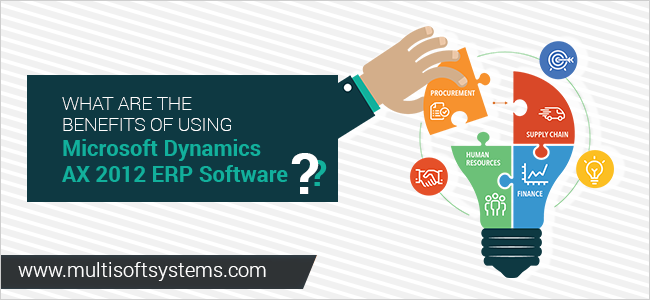
Why is Microsoft Dynamics unique?

On the whole, most report writers make use of customised company financial statements and actual financials from resources. Microsoft Dynamics AX 2012 has a report designer that is built directly into the program. However, it was not really built for BI analyses, because of which third party tools are often preferred for reporting. For this reason, Business Intelligence Development Studio is also being taught to students. What you need to do is seek the best financial reporting solution to integrate with Microsoft Dynamics. Learn more about it in a Microsoft Dynamics training course.

Read More
blog-image

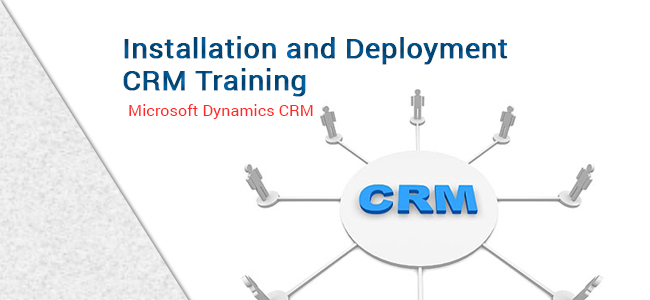
Why Employees Should Go For Installation and Deployment CRM Training


November 6, 2015

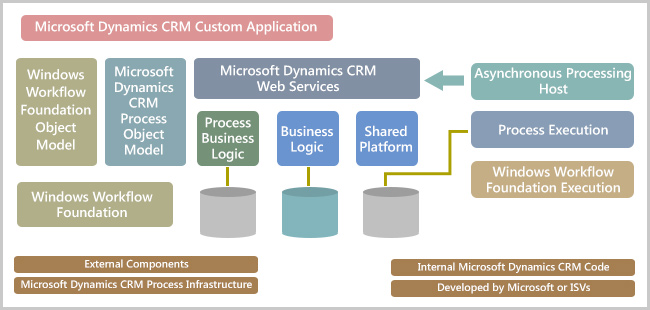
CRM is vital for any company to manage its database of customers. It provides information on managing companies, workforce, customers, contact information and various tasks. Through the training, candidates get to know effective ways of modifying and viewing customer data. There are a large number of data models, such as product data model, customer data model, 360 degree view and others. For this reason, installation and deployment CRM training is vital for most companies.

Microsoft_CRM training_Multisoft_Systems

Role of CRM training

It is interesting to note that CRM training courses are available for every role. The training has a trickle-down effect which tends to make every employee more productive. Administrators always remain on top of current releases. Sales representatives are able to close more deals due to their enhanced customer handling skills. Similarly, IT teams are able to come up with cost-saving cloud applications, as required by the end user. With the help of Salesforce CRM courses, the entire team can be taught to launch Salesforce CRM.

Microsoft Dynamics CRM

Dynamics CRM is a powerful CRM tool that provides a holistic view of every customer. It enables the employees to make swift and educated decisions with regards to strategies in marketing, sales and customer service. The extent to which one can maintain the customer relationship is directly proportional to the mastery of Dynamics CRM.

Installation and configuration of Microsoft Dynamics can be done for candidates to understand automation in CRM. In any reputed training institute, Microsoft Dynamics will be available for installation and deployment. Its features are taught by experienced instructors. Dynamics CRM is able to automate and streamline the entire customer relationship process.

CRM requires suitable training

Any installation and deployment CRM requires extensive training, without which it cannot be successful. Employees need to be able to use the powerful and feature packed tool efficiently, or else the entire practice of deployment will be unsuccessful. For training, one can participate either in classrooms or in the online sphere.

During the training, candidates are taught how to navigate the user interface and gain confidence in the same. The Microsoft Dynamics course is effective in teaching candidates about CRM in detail. 

Read More
blog-image

Importance of Data Storage Explained Through Comptia Storage + Training


November 5, 2015

Storage technology has been greatly in demand over the last decade. With the ever increasing need for it, the importance for CompTIA storage + training has also been on the rise. Through this course, knowledge and skills on data storage, archive, restoration and backup are taught to candidates. Several connectivity issues and storage management through various components are explained in detail.

Blog_CompTIA storage-training-multisoft-systems

Functions of CompTIA storage

With the help of CompTIA storage + training certification, candidates obtain major skills required to configure basic networks, which includes archival, restoration and back-up techniques as told above. To obtain the certification, candidates have to successfully clear an exam. The course also covers fundamentals of disaster recovery, system integration, application workloads and system administration.

The students must also possess CompTIA A+, Network+ certifications. These certifications are ideally suited to the system and network administrators who are responsible for different storage technologies and have a year of experience in the same.

Use of CompTIA storage techniques for IT professionals

IT professionals who are working on networks or data centres require strong storage skills to rise in their career paths. Skills and knowledge needed by IT professionals today include storage as a service (STaaS), network-attached storage (NAS) and storage area networks (SANs).

Data storage can be learnt at different levels, from basic to advanced level topics. One can seek a deeper understanding of data storage networks through this training. One needs to get under the hood of technologies that help in resiliency, availability, performance, cloud storage, security and scalability. CompTIA training gives students intricate knowledge about storage systems and data networks.

Data storage in an organisation

The continued success of any organisation is dependent on the use of advanced technical infrastructures. This includes different kinds of data storage techniques as well. Certified professionals are aware of how to safeguard sensitive information in the company. Of course, organising data with security needs a significant degree of planning and knowledge. CompTIA storage+ professionals are significant for the success of any organisation, whether small, medium or large.

Read More
blog-image

Why Robust & Extensive CRM Software is Essential For Business Growth


November 4, 2015

Why businesses need CRM software?

Originally intended for large businesses for maintaining their customer relations, CRM now is a comprehensive tool to manage and organize sales, accounting, marketing, vendor and all other operational data applications, for all-size businesses.

Blog_PeopleSoft CRM training_multisoftsystems
  1. Sales Quote & Forecast

CRM helps to create and store sales quotes for customers, individual as well as groups. It also helps to project short and long-term sales forecasts easily, without any need for gathering large chunks of data.

  1. Generating Leads

CRM is an efficient tool for finding new customers from various sources like social media, feeds, and more.

  1. E-mail Marketing

A key factor in digital marketing, e-mail marketing can be effectively managed with the help of robust and quality CRM software. It also fosters the prospects with automatic and preset emails and tasks, handling the process up to closing of the sale.

  1. Track Order

Tracking customer order is easy with fully integrated CRM software.

  1. Track Competitors

CRM software also helps the business to stay afloat in the competition by tracking activities and strategies of competitors, through their digital activities and other source of information.

What are the features of a quality CRM?

A comprehensive, extensive and robust quality CRM is necessary to meet the sales objective and business growth. Whether a licensed version or hosted version, below mention features are must:

  • Robust & Comprehensive Dashboard

A dashboard should be such, so as to provide a comprehensive summary view of sales opportunities.

  • API

Quality Application Programming Interface is must o link to other systems, alleviating the need for entering information multiple times.

  • Compounded Contact Information

CRM should provide access to a customer’s details through his/her name as well as a country, to view comprehensive interactions.

Career Prospects with CRM

With growing competition and increased attention towards scalable sale and marketing, each and every business needs a robust and specialized CRM, like Oracle’s PeopleSoft. This provides ample opportunities for sales and marketing professionals in the domain.

To enter this field, a comprehensive training in a specific CRM, like PeopleSoft CRM training, or comprehensive Oracle certification training is must.

Read More
blog-image

Why A Scrum Master is Becoming An Increasing Part of Product Development Team in Organizations


November 2, 2015

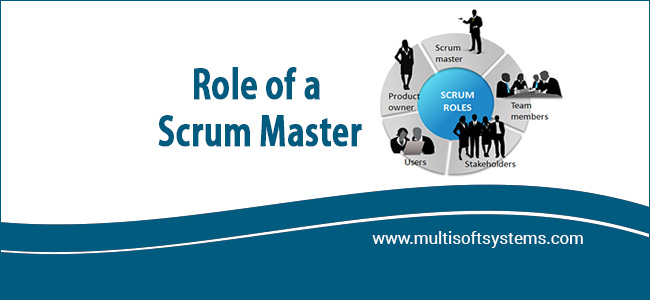
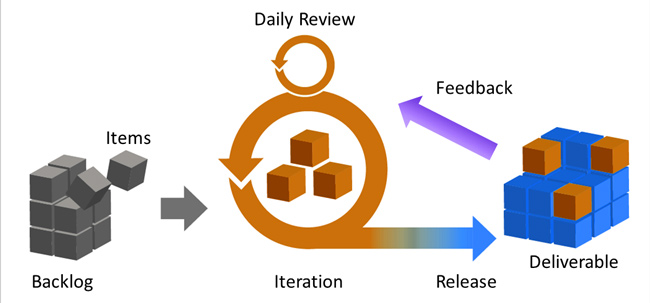
Incidentally a new term (or role), a scrum master is someone who acts as the facilitator for the team and the product owner, ensuring streamlined flow of the work and communication, ensuring successful project completion.

A scrum master does not have the authority to manage or committing to work on the team’s behalf, subsequently meaning that the scrum master works as servant leader.

Blog_Scrum master training_multisoft_systems

Role of a Scrum Master

A scrum master’s role becomes all the more important as he is the one entitled to act as the bridge between the team and the product owner. The scrum master dons various roles, including:

  • Keep the team members focused on assigned tasks and project objectives, whilst protecting their interests.
  • Maximizing the work productivity by assisting the product owner in maintenance of release plan and backlog.
  • Remove any disablement that is causing obstruction in team’s goals and pursuits of project fulfillment.
  • Ensuring team room for developers who are not assembled.
  • Setting us physical task board for team members to let them know what each other is doing.
  • Alleviating any outside interruption and interference.
  • Ensure constant development of scrum practices in a nimble scrum team.
  • Warrant that the work process remains healthy, efficient with smooth progress.

In order to achieve maximum success, scrum master should be proficient in below mentioned skills:

  1. Efficient Servant Leader

As the buffer between the product owner and the team members, his ability as servant leaders should be incorporated with a willingness to garner team member’s respect and go extra mile to get the job done.

  1. Socially Effective

The scrum master should be a persuasive communicator, being able to have an understanding relationship with each team member.

  1. Facilitative in all Aspects

He should be able to lead influentially and exhibit value-add moralities to team members.

  1. Full of Energy

He should be dynamic and readily enthusiastic, high-energy all the time, at all levels.

  1. Aware and Assertive

He should be fully updated with noticeable differences and issues and must be ive to ensure all the principles and concepts are adhered to.

A scrum master is someone who is highly significant in a scrum team, and therefore needs to hone his skills through a quality and comprehensive scrum master training to become highly competent and professional, along with relative experience.

Read More
blog-image

How SQL Azure Holds the Key for Microsoft’s Database Server Future


October 31, 2015

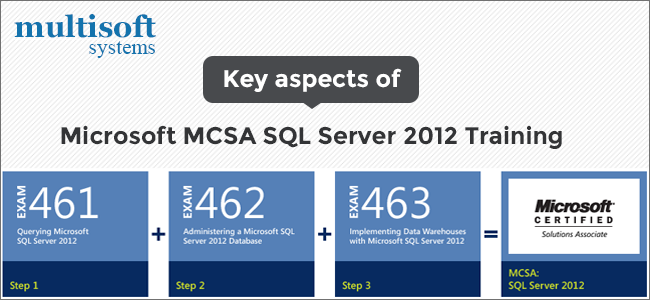
With the release of Microsoft MCSA SQL Server 2012, Microsoft solved toppled several limitations of the Server 2008, and this new version has been widely appreciated by developers and firms. One of the main features of MCSA SQL Server 2012, SQL Azure is specifically being treasured as it has become the backbone of Microsoft cloud service.

MCSA-SQL-Server-2012-Multisoft-Systems

Why Azure is so dear to Microsoft?

Currently, if there is an application that doesn’t run on a cloud, then it is rendered as useless. From firms to developers and communities, everybody is embracing the development of cloud network, which will pave the way for communication and data storage in future. This shift has become a necessity, and therefore, to keep pace with growing demand, Microsoft had to introduce its cloud-based SQL Server platform, SQL Azure. Azure revolutionized the way database server was operated before, as it provides relational database management system features for enterprises at only a fraction of the cost of hardware and licenses requisites of yesteryears.

Why SQL Azure will be the future of database hosting?

The first and foremost thing that puts SQL Azure ahead of in-house SQL Server instances is that it offers all the features and functionalities of the traditional SQL Server through a “cloud” mechanism, with reduced costing and accelerated access, which makes it highly worthy. SQL Azure uses a single physical server to host databases from different customers, unlike current SQL Server where only the operator’s database is present. Some prominent beneficial features of SQL Azure include:

  • Easy to adapt to

SQL Azure will be quite easy and smooth for developers to adopt, as it provides recognizable approach in architecture for authentication, communication and development.

  • High Degree of feature

In correspondence to features, SQL Azure provides a great degree of familiarity and improved interface with mixture of levels of support. Some new features are added to facilitate developer’s need, whilst some are omitted for enhanced functionality.

Future for developers

The SQL Server developers and professionals will need to adapt to Azure platform to keep pace with the growing demand for higher authentication with cloud-based technology.

A comprehensive Microsoft certification training will certainly help a professional in the domain to develop essential skills regarding Azure concepts, which is the future in the SQL Server platform.

Read More
blog-image

A Big Picture of JBoss Middleware Administration


October 30, 2015

JBoss Operations Network or JBoss ON is commonly used as a network management software. It is open source and based on Java EE. JBoss ON is the administration and management framework for testing, development and monitoring of any application cycle. JBoss Middleware Administration Training allows professionals to innovate in a smart way across enterprises.

Blog_JBoss Middleware_training-multisoft-systems

Red Hat and JBoss

JBoss ON is part of the Red Hat Middleware group of enterprise products. These are lightweight, cloud-friendly and helpful for various organisations of today. Many small and medium enterprises prefer to have their information stored in data clouds. In a similar manner, many other functions are performed by the enterprise products of today.

Role of middleware in an organisation

Having the right middleware is very important for the success of an organisation. It helps the IT teams of a company be more productive than ever. The applications are built quicker and are also deployed quicker than before. With the right middleware, systems and data get connected and remain connected in an efficient way. Apart from these, time-consuming manual processes make way for automation through middleware.

JBoss Middleware brings together software from different open source communities. These include JBoss, Apache software foundation and Eclipse foundation, which are further integrated into robust platforms. Benefits of all these platforms are together obtained from JBoss.

Role of a JBoss System Administrator

A system administrator on JBoss needs to perform several tasks. Details about these tasks are given during the JBoss Middleware Administration Training course. These are essential, real world tasks that the administrator should be familiar with, in order to successfully deploy applications and manage the same.

Not only lightweight Java applications, but also large scale websites can be handled by JBoss. In fact, JBoss EWS can be deployed in various forms. It can be used as a simple Java application server, an enterprise open source application infrastructure or a Java enterprise web server.

Job opportunities for JBoss System Administrators

One look at various job portals and communities will show you that there are several opportunities for those with JBoss Middleware Administration skills. Therefore, it can be said that there is tremendous scope for growth in this field. The demand for such professionals is high in the industry. JBoss is owned by Red Hat, and there are also many Red Hat training courses in the market.

Read More
blog-image

Automation Testing And Its Role in Simplifying Product Development


October 29, 2015

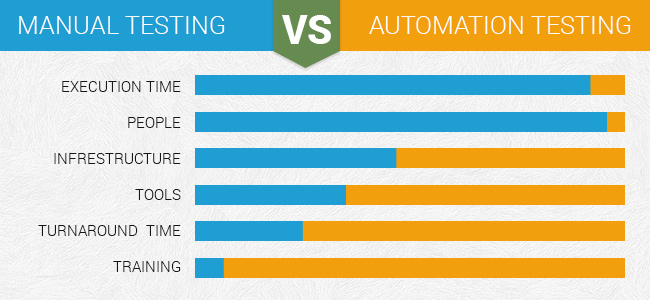
Automation testing leads to shortening of the product development cycles in any company. Cumbersome and repetitive tasks are avoided, along with a marked improvement in software quality. Testing software in order to find fixes for bugs is a long and expensive process, subject to human errors.

automation-testing-training-multisoft-systems

Overall benefits of automated testing

Automated vs. manual testing has always been a hot topic of debate among software professionals. Though both are necessary, it all comes down to how much automated testing can be incorporated into the development process.

  • Repetitive work not done by humans
  • High degree of consistency is achieved
  • While executing an automated test suite, human intervention is not necessary
  • Information about tests can be easily accessed at anytime
  • Tests running on multiple hardware or software configurations can be easily used here
  • Speed of IT product development is greater in comparison to manual testing

Looking at the benefits, it is natural that software professionals need to be familiar with the process, which shall be discussed in the next section.

How to follow automated testing

Certain decisions need to be taken with respect to automated testing, the details of which are given ahead.

Step 1: Decide what software to automate

Let’s be honest- it is not possible to automate the entire range of cases. Tests run frequently and requiring huge amounts of data should preferably be automated. It is necessary to have an automation plan in place.

Step 2: Testing to be done early

For best results, it is recommended that tests should commence as early as possible in the development cycle. It will help locate as many bugs as possible.

Step 3: Select the correct testing tool

There are many automatic tools in the market, and it is vital to choose one that fits your requirement, as per flexibility for testers and support for available technology.

Step 4: Divide automated testing correctly

Some QA engineers may be good at writing test cases, while others could be well versed with making automated test scripts. Make sure you allot them tasks accordingly.

Step 5: Creating automated tests resistant to changes in UI

Many properties are used by automated testing to identify the location of an object. To locate objects successfully each time, controls need to be given unique names. This will make automated tests resistant to UI changes.

Through automation testing training, engineers realise that life in the testing lab can be made simple. A software creator can receive several advantages with this and from other software testing courses.

Read More
blog-image

5 essential web design rules every designer should follow


October 28, 2015

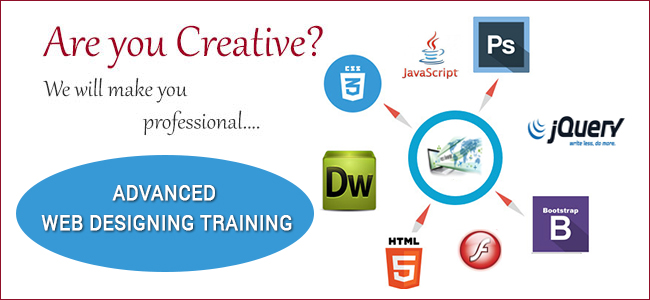
There is a significant difference between the outcome of a good web design and poor web design. Well-designed website tends to have a higher page visit, high conversions, low bounce rates and enhanced consumer engagement. Whereas, a poorly designed tends to show a negative response in all these metrics.

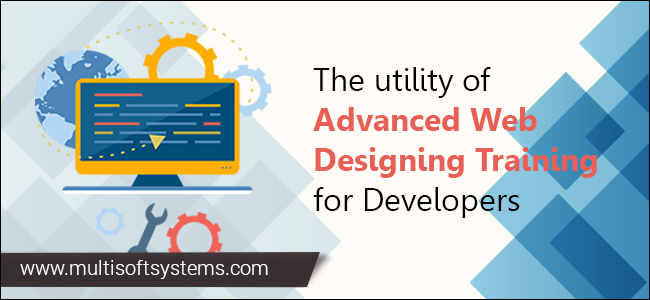
Advanced Web_Designing Training_multisoft-systems

Below, we discuss the 5 most important web design principles:

  1. Type Design

A website is all about the typography, fundamentally. An optimized website should adhere to the central rules of typeface, developing a perfect text design:

  • Use Sans Serif font for headlines, which is easy to read and supported by all browsers and; make them bold.
  • Use Serif typeface, like Arial and Verdana for body texts.
  • Ideally, the font size should be large for easy reading; use 16px at minimum.
  • Streamline your text with 50-60 character lines.
  1. Content Layout – Defining Business Purpose

Each product is designed and developed according to the objective. A well-designed website satisfies the requirements of the user. Each and every webpage should, specifically, fit the theme of the business and purpose. Do not place your content randomly. Use sections, boxes, and columns with proper breathing room and margins, which lead to better looking and easy-to-grasp content.

  1. Navigation

A good navigation increases the chance of higher rate of customer engagement and low bounce rates. Give your site a structured navigation, to enable the user to understand and move around the site easily. You should incorporate logical page hierarchy, including bread crumbs. A must-have is to include ‘3-click’ rule, meaning the user should find the required information within 3 clicks.

  1. Images

Web is pixel based, so choose the right size, high quality images which have clear depiction. If not produced by you, use images from third party sources, but choose only which meets the theme of the subject. Images and videos bring a lot of credibility for your communication purpose.

  1. Responsive

Use the advanced version of your script language, optimizing the images and codes to decrease the load times. Develop sites which are responsive in nature, meaning friendly and accessible on all platforms including desktop, laptop, mobile and tablet.

Understanding high-end web design layout is fundamental in today’s digital age, which needs to be incorporated by the designer when undergoing web designing course. The web designer should hone these skills, learning all the concepts with an advanced web designing training.

Read More
blog-image

Linux Device Drivers Course- Helping With The Adaptation of Linux


October 27, 2015

One of the most commonly used Operating Systems in IT departments of most organisations is Linux. For professionals to work in these departments, it is important not just to know the OS but also its device drivers. Skills on process management, memory management, scheduling, time management and interrupt handling are taught to professionals who enrol for a Linux device drivers course.

Linux-device-drivers-course

Several types of system calls are made in Linux. Candidates need to understand the significance and the various types of system calls. Virtual File System, time management and interrupt handlers are also given substantial attention by the experienced instructors in reputed training institutes. As mentioned above, process management is also considered vital in Linux. It can be understood through multitasking, scheduling algorithms and Linux process scheduler policy.

Target audience for Linux device driver training

Working professionals in the embedded systems field and professionals who wish to develop their programming skills are ideal for this course. Even final year students from MCA/BCA and those in 3rd and 4th year of B Tech. can sit for this training to get a broad perspective of Linux. However, it is essential that candidates enrolling for this training must have a prior knowledge of Linux and shell scripts.

Important objectives of training in Linux device drivers

While you may have read about system calls, scheduling, process management and other features above, there is also much to be learnt about the device drivers themselves. The concept of the device driver is introduced to participants, along with which they also get to know about the different types. The functions for loading or unloading a module are also taught to the candidates. They understand more about the loadable modules and their benefits.

In addition to the above, one must know how to write a device driver program. Different device information is required and candidates get hands on practice on writing the program. Compiling and loading modules, userspace interaction, registering character device drivers and Lcd implementation are some of the other objectives of the Linux device drivers course. Linux can also be known through one of the embedded systems courses.

Read More
blog-image

Know Oracle General Ledger For Financial Management in An Organisation


October 26, 2015

Software giant Oracle has its own business software available in the market. This comprises of non-database and non-middleware parts that are present in the Oracle business portfolio. The Oracle E-business suite 12.1 General Ledger essentials examination is meant for students who have a strong foundation in implementation of the business suite general ledger Financial Management solutions. To clear this exam, Oracle general ledger training from a reputed institute is necessary.

Oracle-training-courses-Multisoft-systems

Over the course of this training, participants acquire skills to maximise their accounting process efficiencies in any enterprise. They understand how Oracle general ledger cam be integrated with other applications of the Oracle e-business suite. An experienced mentor helps them learn how to complete the entire accounting cycle. Basic accounting techniques of making journal entries and reverse entries are taught on the Oracle general ledger software, and so is data access security.

In the Oracle general ledger exam, candidates need to be aware of how to navigate the e-business suite, entering data, retrieving data as queries and also obtaining online help. Knowledge of Summary Accounts, General Ledger process, Accounting Setup Manager, Basic Journal entries, Advanced journal entries, Financial Budget, Multi-currency and a few others is necessary. In addition, adequate field experience is advised.

Features of the Oracle general ledger make it a useful software for Financial Management in any organisation, whether small or large.   Here is a list of some of the functions and features of the general ledger module:

  • Using Mass Allocations for automating cost and revenue allocations swiftly and correctly
  • Making use of the Financial Statement Generator (FSG) for creation of custom financial reports
  • Defining multiple calendars and accounting structures, as well as creation of new accounts defined combinations as per user rules
  • Automated conversion of foreign currency
  • Manipulation and analysis of accounting information

Candidates who appear for this training must have some accounting knowledge and experience of navigating any Oracle applications. Functional Implementers and Project Managers are ideal candidates for this course. By learning from such Oracle training courses, candidates can climb really high in their respective organisations.

Read More

blog-image

Future Scope of Major Programming Language- Python


October 24, 2015

Python has been an important part of Google since the beginning, and remains so as the system grows and evolves. Today, dozens of Google engineers use Python, and we're looking for more people with skills in this language."

Peter Norvig,

Director of search quality at Google, Inc.

Blog_Python programming training

Python is here to stay! And we have reasons to state that. Python programming training has seen increasing popularity among the masses and Linux communities is also being used by big players like Google. Python is a comprehensive and major high level programming language which is mostly associated with Linux domain of users. It is an open source language lending support to the main programming codes that are in vogue. The best part is that python programmers can write codes that can be object-oriented, functional or imperative in design.

This language was designed with an aim to provide platform independence and code readability in mind. These 2 unique features make this language logical and adaptable as well as easier to understand. The flexibility that Python runs same source code on a wide array of platforms, which so ever it operates  makes it stand out of the crowd in programming market today, where majorly all other languages fall short. Python has been described as most organized and standardized language by several users. With these remarkable powers, and portability across multiple platforms, this language promises a well built career ahead for all the aspirants.

How we can say Python has long way to go?

  1. In a recent survey conducted online by Linux Journal, Python has been voted as one of the most sought after and favorite programming language beating the likes of C, C++ and JAVA. It is being considered as a prerequisite for Linux jobs as both Linux and Python world are open source and have a great deal of synergy between them.
  2. Python is being used worldwide in a wide range of environment. Be it as a part of skills, for corporate use or educational settings, it is being taught at both entry as well as advanced level. It doesn’t end here; Python is used by Google machine and big projects like Red Hat, Disney etc.
  3. It’s versatile, robust and comprehensive programming language. It is being featured in the top 10 most popular programming languages being used in the industry.
  4. It has true portability features and can be used across a multitude of platforms. This flexibility and extensibility make it loved by programmers.

Understanding of Python indicates understanding of Linux systems. Both the platforms are bundled together and Python acts as a standard feature for developers and Linux administrators. . It is being successfully used in thousands of business applications.

Being a free and open source, it is being preferred over other alternatives. To practice and learn, opt for some professional, Python programming training. It helps to understand the concepts and implementation. Surely, Python is not going to fade away for now!

Read More

blog-image

4 important ITIL<sup>®</sup> Service Strategy factors for efficient IT Service Management process


October 23, 2015

The ITIL® Lifecycle model is a key concept for organizations, looking to implement the best practices for IT Service Management. And out of the five stages in the lifecycle approach, the first one that is ITIL® Service Strategy is the most important, as it defines the plans to be undertaken.

This is the phase where design, development and implementation guide of IT Service Management takes place, considering varying factors like risks, costs and service performance. Service Strategy focuses on the big picture – Why this service? In short, this is the stage where all the strategic decision and planning incepts.

Service Strategy Factors

Identifying the targeted market and how to implement their strategy for an effective outcome, Service Strategy deals with several factors, detailed below:

  1. Demand Management: Demand Management keeps the balance between capacity and availability, focusing upon forecasting and estimation. The organization needs to fully understand the Patterns of Business Activity for a customer to determine the demand more accurately.
  2. Service Portfolio Management: This is where the business understands what services are available and what will be the incurred costs to utilize them. It analyzes the overall service portfolio, concerning investment and allocated resources.
  3. Business Relationship Management: A latest process in the lifecycle stages, Business Relationship Management is vital for establishing a proactive relation between customer and service provider, aimed at understanding & meeting the business requirement. BRM helps to distinctively enable the mutual relationship of IT and business for handling strategic requirement and business results.
  4. Financial Management: Financial Management deals about all the capital involved. For the comprehensive planning and effective outcome of a service, financial management is a crucial management aspect for each organization. It helps to understand, define and achieve the financial goals.

Service Strategy is the platform for an organization to strategize, plan and act accordingly to grow successfully, utilizing and managing the resources efficiently.

For any aspirant looking to become a competent professional in the IT Service Management domain, full understanding and knowledge of Service Strategy is essential for implementing ITIL® Lifecycle. A quality and extensive ITIL® Service Strategy training will help the aspirant to understand the concepts extensively and implement them advantageously for better outcomes.

Note: 1. ITIL® is a registered trade mark of AXELOS Limited. 2. Swirl logo™ is a registered trademark of AXELOS Limited
Read More

blog-image

Proliferation of DSP Using Matlab in The Market


October 21, 2015

Matlab is known to be a computing tool that explores various DSP topics and solves their problems in order to have an insight. The abbreviation DSP stands for Digital Signal Processing, through which a complex range of problems can be explored. All the DSP applications are algorithms that have been implemented on a DSP processor, which means participants must have considerable knowledge of programming. To learn these techniques of working on DSP, reputed training institutes have courses on DSP using Matlab.

Blog_DSP using Matlab_Multisoft-systems

While learning Matlab programming, trainees are given opportunities to create interfaces in the real world with the use of serial ports. Through projects, participants get hands-on experience in dealing with different parameters such as speech recognition, colour object processing, image processing and motion sensing among others. Model-based designing is also explained to the students via this training.

Different topics taught in DSP Matlab training

  • Develop a clear cut understanding of DSP
  • Creation of real time DSP applications
  • Matrices and arrays with the use of Matlab
  • Gain familiarity with the Matlab software as well as command prompt
  • Matlab simulink model with mathematical equations as well as dynamic systems

Who should take up DSP training?

Students who are in third and fourth year of B. Tech courses can take up Matlab training with DSP. In addition, working professionals who are familiar with various technologies such as chemical and embedded systems can also learn the concepts. The course is also open to those professionals generally interested to develop or enhance their Matlab skills.

Digital Signal Processing is the field which brings together mathematical theory and physical implementation. It must be possible to physically construct any digital system. Though Matlab is expensive, it is an ideal tool to be used for simulating systems, and also for creating “proof of concept”.

Use of DSP applications in the market    

Today DSP is being used in a variety of consumer areas. Some of these areas are bioinformatics, MPEG-based satellite television and MP3 format. These technologies have fuelled the need to know about DSP outside of hardware circles.  

Read More

video-img

Request for Enquiry

  WhatsApp Chat

Get Free Expert Counseling
Speak with our expert and accelerate your career today.
whatsapp-icon-small
whatsapp-icon-small
whatsapp-icon-small

Connect on whatsapp